Supporting a Culturally Grounded Behavioral Health Workforce in Hawaiʻi
PCW founder Jo Qinaʻau provided a three-part training series for the post-doctoral psychology (PsyD) and post-master of social work (MSW) fellows of Mohala Liko Lehua, a first-of-its-kind fellowship training the next generation of culturally grounded behavioral health providers in Hawaiʻi. A collaboration between the University of Hawaiʻi at Mānoa John A. Burns School of Medicine (JABSOM) Department of Native Hawaiian Health and Hawaiʻi Land Trust (HILT), the fellowship prepares homegrown clinicians to deliver trauma-informed, ʻāina- and culture-based care across Oʻahu, Maui, Kauaʻi, and Hawaiʻi Island.
The three sessions were designed to hold together what Western training too often keeps apart: Indigenous theory, evidence-based therapy, and embodied practice. Each addressed a different layer of culturally grounded care, and together they modeled the kind of integration the fellows will be asked to carry into their own work.
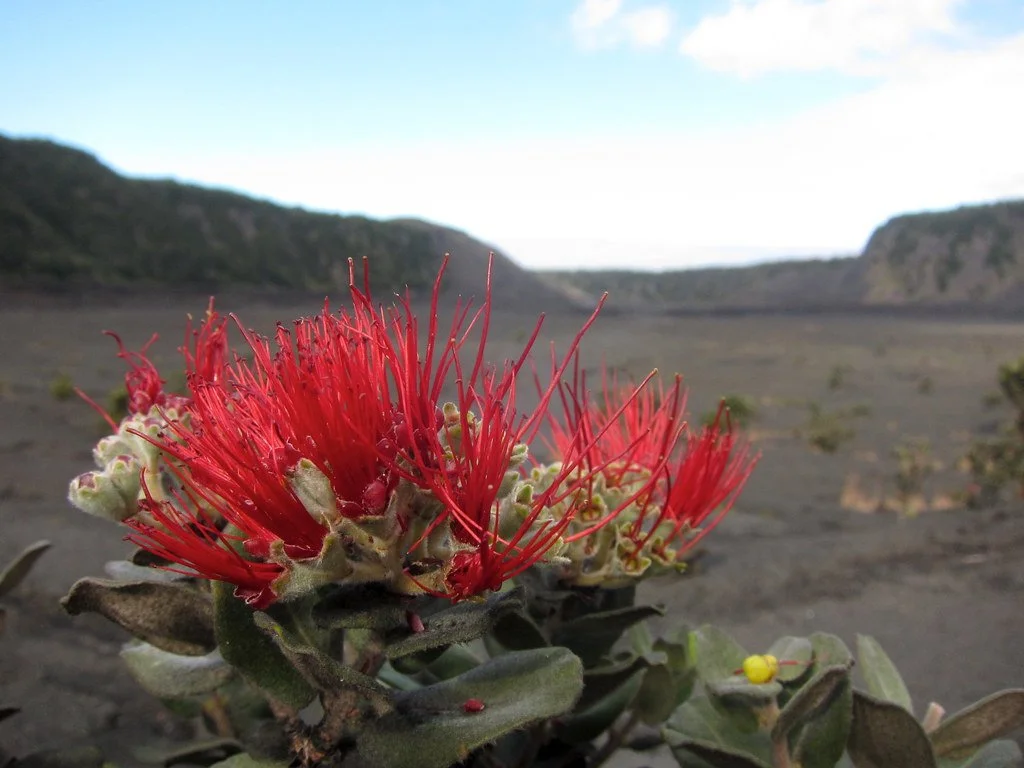
The resilience of lehua.
Honoring Kanaka ʻŌiwi clients with KANU
The first session introduced Ke Ao Nōweo ʻUla (KANU), a mauli ola (wellbeing) theory developed through community-based, decolonial research with Kanaka ʻŌiwi clients, providers, and cultural leaders. KANU frames wellbeing not as an individual condition but as a dynamic relational ecology, with pilina (reciprocal connection) and pono (balance) running across every level from the individual to ʻohana, kaiāulu, and ʻāina.
Fellows engaged the harder history as well: the Moʻohihia model of settler colonial stress, the documented health disparities Kānaka ʻŌiwi carry, and the structural roots of those disparities. The session moved from that reckoning toward supports and states of mauli ola, and closed with applied clinical material, including a case study illustrating how Western interventions and Kanaka ʻŌiwi supports can be held side by side, and a vision for decolonial integrative care through a multi-eyed seeing approach. Fellows also received E Hoʻomana me nā Kumu Waiwai, a directory of more than 120 mauli ola resources spanning culture, health, community, social services, and support for diaspora Kānaka, compiled at the request of the KANU research participants for use in their own practice.
What fellows gained: the ability to describe KANU and the relational, ecological theory of mauli ola it advances; an understanding of the Moʻohihia model of settler colonial stress and its link to documented health disparities; an approach to assessment and treatment planning that holds Western interventions and Kanaka ʻŌiwi supports side by side; and a directory of culturally grounded resources to share with clients.
How you going ACT? Psychological flexibility as a shared language
The second session turned to Acceptance and Commitment Therapy (ACT), a third-wave cognitive behavioral therapy recognized as an empirically supported treatment and deployed worldwide. Rather than aiming to eliminate distressing thoughts and feelings, ACT works to change a person's relationship to them, building psychological flexibility as a transdiagnostic, high-leverage target for change.
Fellows worked through all six processes of psychological flexibility, present-moment awareness, acceptance, cognitive defusion, self-as-context, values, and committed action, through journaling, metaphor, and experiential exercise rather than lecture alone. Throughout, the session attended to culture and equity: the underrepresentation of racial and gender minorities in ACT trials, the evidence that culturally adapted interventions outperform unadapted ones, and the way values work can hold ʻŌlelo Hawaiʻi and cross-cultural value terms alongside the clinical model.
What fellows gained: an understanding of ACT's history, features, and theoretical basis, and its place among the three waves of CBT; firsthand experience of all six processes of psychological flexibility; and a grounding in the cultural and equity dimensions of ACT, including culturally adapted approaches and values work across languages and traditions.
Integrative tools in behavioral healthcare
The third session offered a huakaʻi through four mind-body practices, mindfulness, meditation, yoga, and relaxation techniques, anchored in the National Center for Complementary and Integrative Health (NCCIH) framework. Beginning with the Cartesian mind-body split that psychology inherited, the session moved toward a more holistic and Indigenous understanding of health, one that treats mind, body, and spirit as inseparable.
Fellows did not just hear about these practices, they experienced them, from mindfulness of music and breathwork to lovingkindness meditation and asana for depression and anxiety. The session paired an honest reading of the evidence base, distinguishing where research is strong, moderate, or still emerging, with sustained attention to cultural integrity and to the trauma-informed principles essential to safe practice: invitational language, non-coercion, present-moment focus, and respect for each person's agency and choice. Fellows also left with a curated resource list of contemplative practices, apps, and readings to draw on and share directly with their clients.
What fellows gained: the ability to distinguish mindfulness, meditation, yoga, and relaxation techniques and the evidence base for each; practice in trauma-informed delivery grounded in invitational language, non-coercion, and client agency; and a curated resource list of contemplative practices, apps, and readings to share with clients.
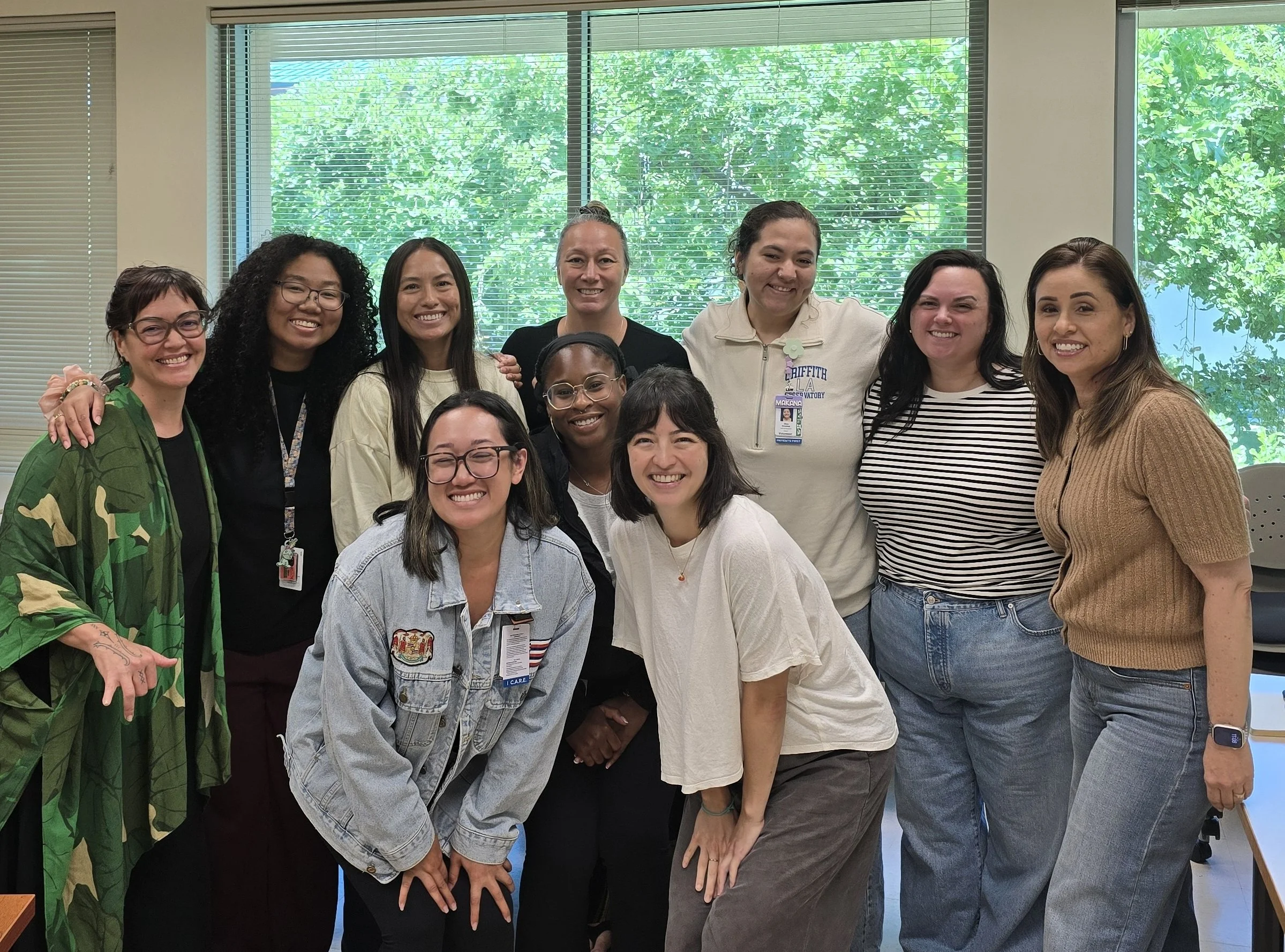
Program fellows, supervisors, and leads at our last session togther.
Why this matters
Mohala Liko Lehua takes its name from the ʻōlelo noʻeau Mōhala i ka wai, ka maka o ka pua, suggesting that flowers thrive when conditions are right. Preparing fellows who can move fluently between Indigenous wellbeing theory, evidence-based therapy, and embodied practice is one way of tending those conditions, so that the providers Hawaiʻi grows can offer care that is rigorous, trauma-informed, and rooted in the values of the communities they serve.
PCW is grateful to the fellows for their presence and openness, and to JABSOM and HILT for the invitation to contribute to this important pipeline.
The Pilina Center for Wellbeing partners with organizations across Hawaiʻi and beyond to deliver culturally grounded, evidence-based wellbeing training and program development. To stay connected with our work, join our newsletter and connect with us here.